
Personal AI Infrastructure, Explained for High Schoolers
Personal AI Infrastructure: Explained for Real
What Is It, Actually?
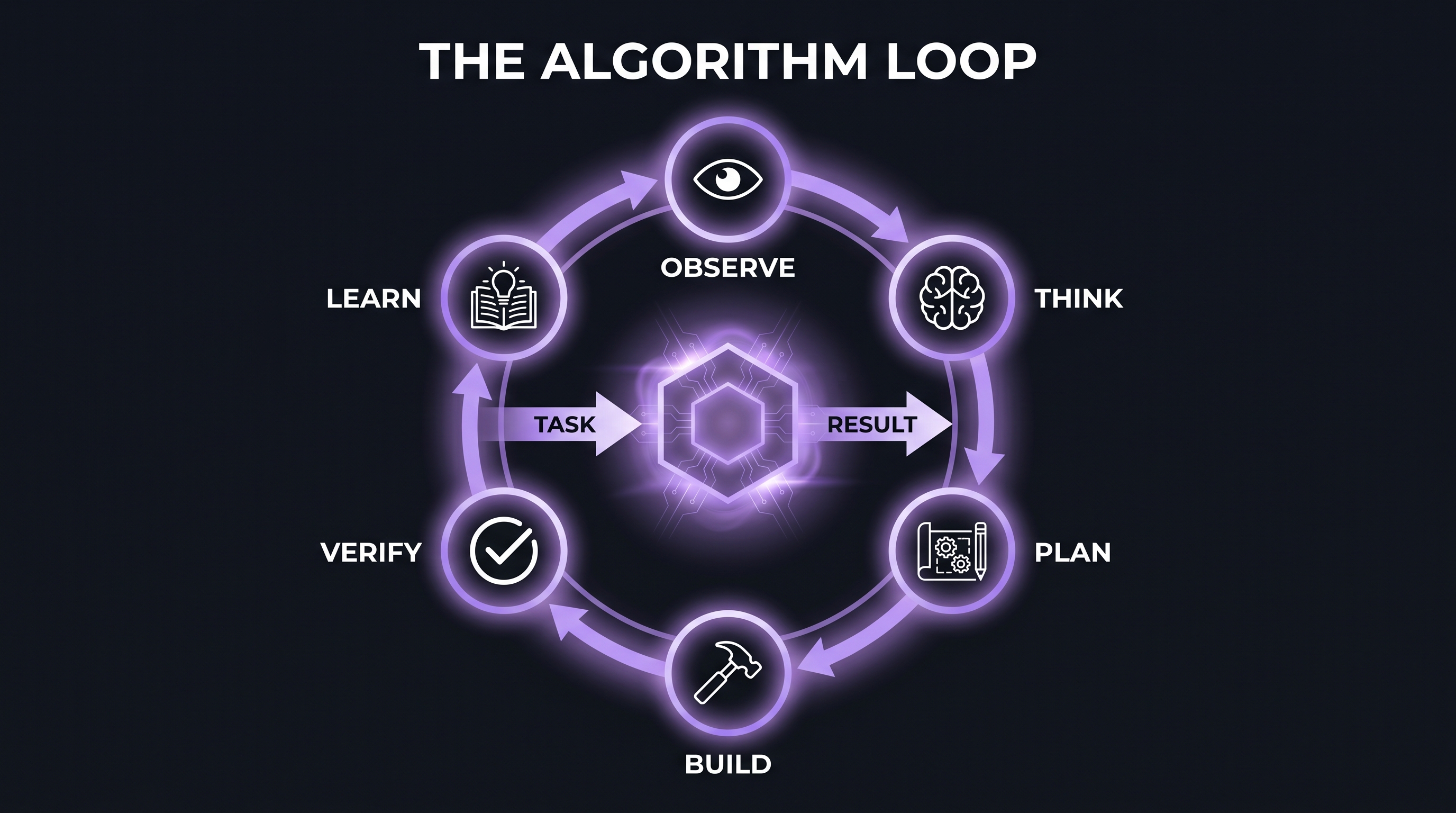
Think about your phone. It’s not just one thing — it’s a whole system. There’s an operating system (iOS or Android) that manages everything underneath. Then you have apps on top. Then you, choosing what to run.
Now imagine the same idea, but for your AI assistant.
Personal AI Infrastructure (PAI) is a system built on top of a base AI (like Claude) that makes it dramatically more capable, consistent, and yours. The raw AI model is like a powerful engine — PAI is the car built around that engine, with a steering wheel, a GPS, memory, and a whole toolkit in the trunk.
Without PAI, you’re texting a very smart stranger every time. With PAI, you have a personal AI that knows your work, follows your rules, and gets better at helping you every day.
The Building Blocks: Skills
Here’s the phone analogy again. Your phone comes with a browser, but you also install Spotify, Notion, and a flashcard app. Each app does one thing really well.
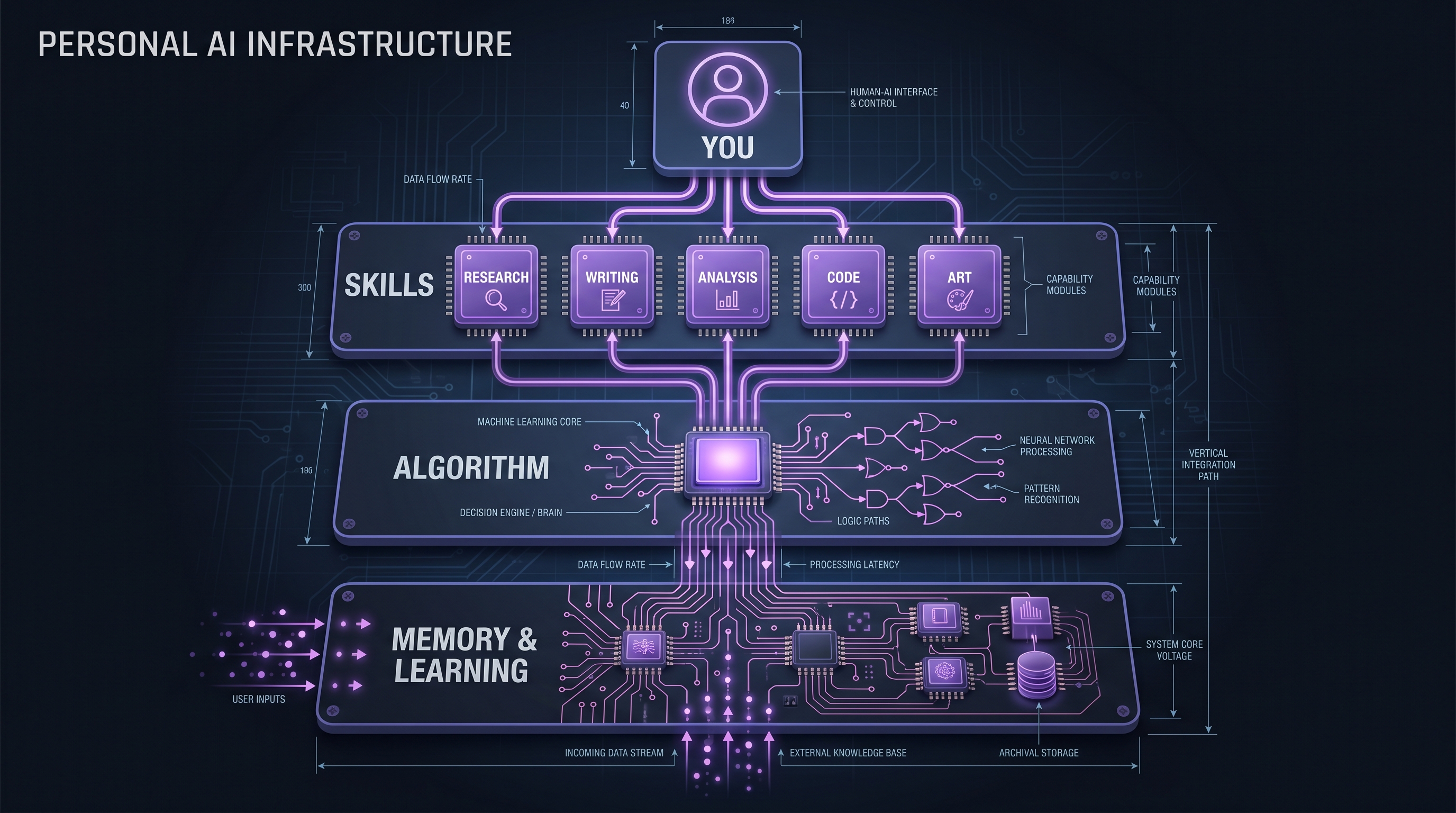
PAI has skills — modular capabilities you plug in for specific jobs. There’s a Research skill that knows how to hunt down information across multiple sources. There’s a Writing skill that knows your voice and style. There’s an Art skill that generates images. A Code skill. A Security skill. An Oracle HCM skill (yes, even specialized work tools).
Each skill has its own instructions, preferences, and logic. When a task comes in, PAI routes it to the right skill — or combination of skills — automatically.
You don’t tell it which skill to use. You just describe what you need. The system figures out the rest.
The Brain: The Algorithm
Here’s where it gets genuinely interesting.
Most people use AI the same way they’d text a friend — fire off a message, get a reply. But here’s the problem: even really smart people make bad decisions when they skip straight to answering. They miss context. They don’t consider what could go wrong. They just react.
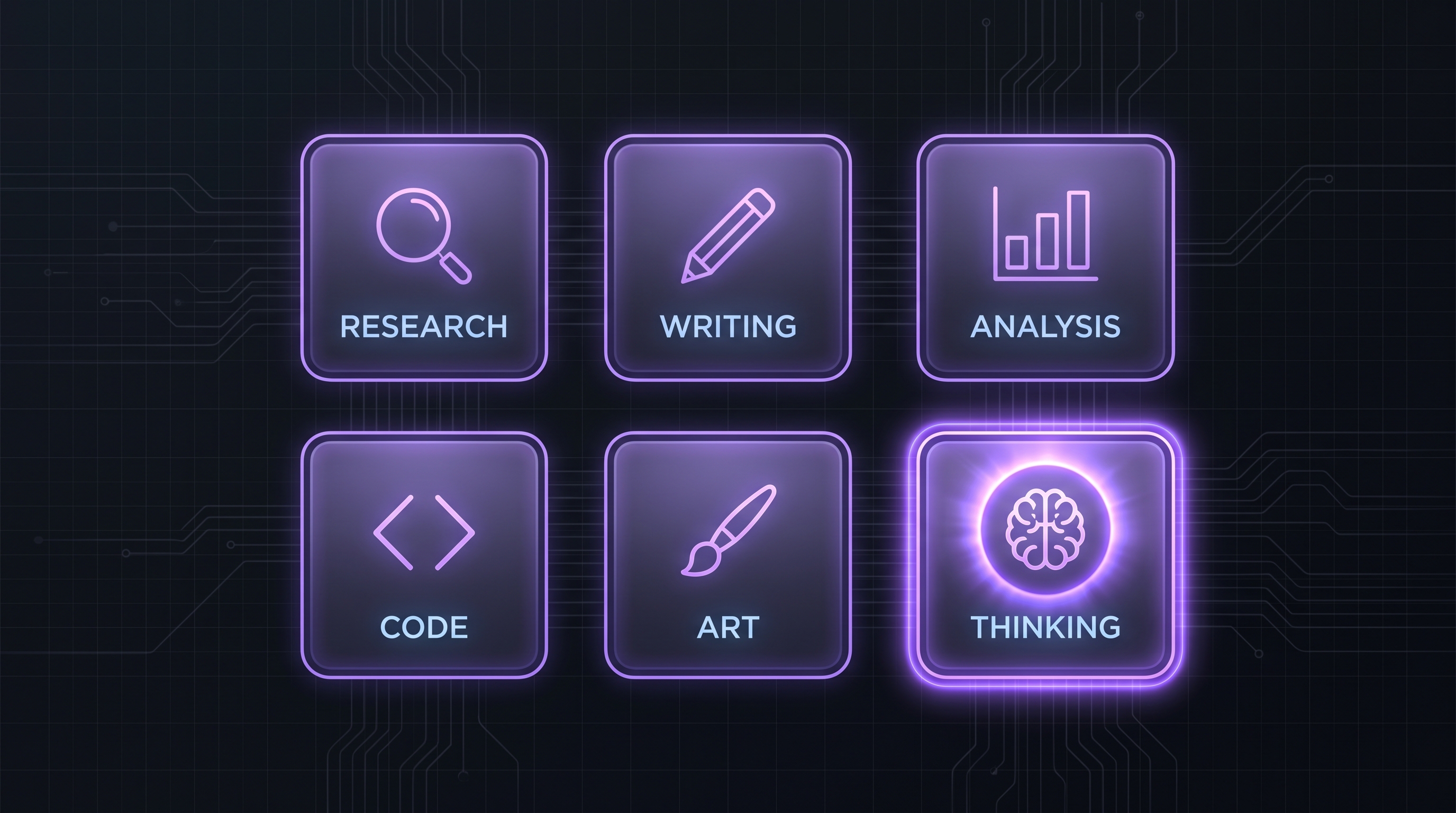
PAI’s Algorithm forces the AI to slow down and think before it acts. Every non-trivial task goes through a loop:
- Observe — What’s really being asked here? What’s implied? What’s not wanted?
- Think — What could go wrong? What are the riskiest assumptions?
- Plan — What’s the smartest approach? What capabilities do we need?
- Build — Gather resources, prep tools.
- Execute — Do the actual work.
- Verify — Did it actually accomplish the goal? Check against the criteria.
- Learn — What should be done differently next time?
Think of it like a surgeon’s pre-op checklist. Yes, surgeons are experts — but they still run the checklist every time. Not because they forgot how to do their job, but because structure prevents costly mistakes.
The Algorithm isn’t a crutch. It’s a discipline.
Memory and Learning: The AI That Actually Remembers
Standard AI has no memory between conversations. Every chat starts from scratch — like a goldfish. Brilliant, but perpetually forgetful.
PAI fixes this with a memory system. Every session, the AI can:
- Save facts about you (your job, your preferences, your projects)
- Log signals — ratings and feedback that tell it how well it did
- Write reflections — structured notes on what it should do differently
Over time, the system builds a real picture of who you are and how you work. It stops asking the same clarifying questions. It learns your preferences. It gets faster at doing things well because it’s already seen your patterns.
This is why PAI is called infrastructure — it’s not a tool you pick up and put down. It’s something you build up over time, and it compounds. The longer you use it, the more powerful it becomes.
How Is This Different From Just Using ChatGPT?
Great question. Here’s the honest comparison:
| ChatGPT (raw) | Personal AI Infrastructure |
|---|---|
| No memory between chats | Persistent memory across all sessions |
| One-size-fits-all responses | Customized to your work, voice, and rules |
| You describe what to do every time | It knows your workflows — you describe the goal |
| No skills layer | 34+ specialized skills for specific domains |
| No learning loop | Tracks signals, improves over time |
| Reacts to prompts | Follows the Algorithm — thinks before acting |
It’s the difference between hiring a random freelancer each day versus having a trusted team member who knows your entire operation.
So Why Should You Care?
Here’s the honest pitch:
AI is already shaping which people get things done and which people get left behind. The gap isn’t between “people who use AI” and “people who don’t.” The gap is between people who use AI well — with structure, memory, and compounding knowledge — and people who just type into a box and hope.
PAI is the blueprint for using AI well.
You don’t have to build it at the same scale. But the principles — modular skills, structured decision-making, a system that learns — these are the ideas that separate a person who uses AI as a calculator from a person who uses AI as an amplifier.
If you’re 16 right now and you understand this, you’re ahead of most adults in the workforce. Not because you know more — but because you understand that the tool is only as powerful as the system around it.
That’s what Personal AI Infrastructure is. A system. Built on purpose. Designed to grow.